
No Farewell To Arms?
Military Disengagement From Politics In Africa And Latin America
Inbunden, Engelska, 2019
3 279 kr
Beställningsvara. Skickas inom 10-15 vardagar. Fri frakt för medlemmar vid köp för minst 249 kr.
Finns i fler format (1)
In many contemporary nations, particularly in Africa, Asia, and Latin America, the armed forces play a major role in governing. Historical, economic, and sociological factors have contributed to the political prominence of the military in developing countries. Nevertheless, in the 1980s several states in Latin America restored civilian rule followi
Produktinformation
- Utgivningsdatum2019-05-01
- Mått152 x 229 x 18 mm
- Vikt453 g
- FormatInbunden
- SpråkEngelska
- Antal sidor240
- FörlagTaylor & Francis Ltd
- ISBN9780367013905
Tillhör följande kategorier
Hoppa över listan





Mer från samma författare
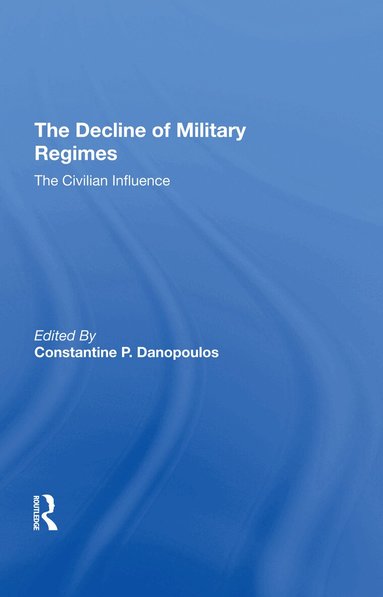
Decline Of Military Regimes
Constantine P Danopoulos, Robin A Remington, James Brown, Claude Welch
Inbunden, 2019
3 249 kr
Decline Of Military Regimes
Constantine P Danopoulos, Robin A Remington, James Brown, Claude Welch
Häftad, 2024
779 kr
Hoppa över listan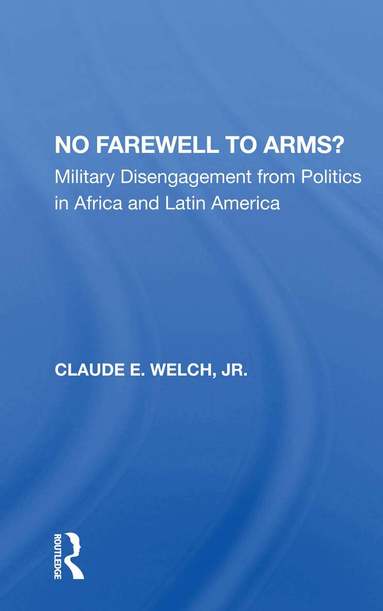
Du kanske också är intresserad av
Decline Of Military Regimes
Constantine P Danopoulos, Robin A Remington, James Brown, Claude Welch
Häftad, 2024
779 kr
Decline Of Military Regimes
Constantine P Danopoulos, Robin A Remington, James Brown, Claude Welch
Inbunden, 2019
3 249 kr