
Del 9 i serien Bristol Studies in Medieval Cultures
Charlemagne in Medieval German and Dutch Literature
Inbunden, Engelska, 2021
1 829 kr
Beställningsvara. Skickas inom 5-8 vardagar. Fri frakt för medlemmar vid köp för minst 249 kr.
Comprehensive survey of the legend of Charlemagne in the medieval German-speaking world.The legend of the Frankish emperor Charlemagne is widespread through the literature of the European Middle Ages. This book offers a detailed and critical analysis of how this myth emerged and developed in medieval German and Dutch literatures, bringing to light the vast array of narratives either idealizing, if not glorifying, Charlemagne as a political and religious leader, or, at times, criticizing or even ridiculing him as a pompous and ineffectual ruler. The motif is traced from its earliest origins in chronicles, in the Kaiserchronik, through the Rolandslied and Der Stricker's Karl der Große, to his recasting as a saint in the Zürcher Buch vom Heiligen Karl.
Produktinformation
- Utgivningsdatum2021-01-15
- Mått156 x 234 x 23 mm
- Vikt510 g
- FormatInbunden
- SpråkEngelska
- SerieBristol Studies in Medieval Cultures
- Antal sidor260
- FörlagBoydell & Brewer Ltd
- ISBN9781843845836
Tillhör följande kategorier
Hoppa över listan



Mer från samma författare
Early History of the Southwest through the Eyes of German-Speaking Jesuit Missionaries
Albrecht Classen
Inbunden, 2012
1 729 kr
Hoppa över listan
Mer från samma serie
Del 5
Del 5
Del 1
Del 3
Del 6
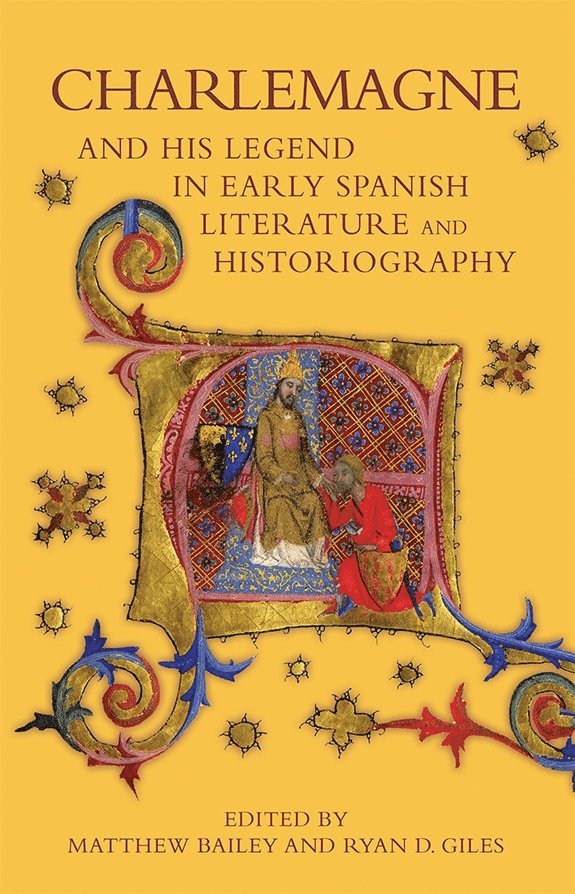
Charlemagne and his Legend in Early Spanish Literature and Historiography
Matthew Bailey, Ryan D. Giles
Inbunden, 2016
1 639 kr
Del 4
Del 7
Del 8
Del 8
Del 10
Hoppa över listan
Du kanske också är intresserad av
Del 10
Del 4
Del 8
Del 5
Del 7
Del 8
Del 5
Del 6
Charlemagne and his Legend in Early Spanish Literature and Historiography
Matthew Bailey, Ryan D. Giles
Inbunden, 2016
1 639 kr
Del 3
- Nyhet
Del 3