
Del i serien Routledge Studies in the Modern History of Asia
China-Japan Rapprochement and the United States
In the Wake of Nixon's Visit to Beijing
Inbunden, Engelska, 2021
3 379 kr
Beställningsvara. Skickas inom 10-15 vardagar. Fri frakt för medlemmar vid köp för minst 249 kr.
Finns i fler format (1)
Based on extensive original research including interviews with key participants, this book examines how, following Richard Nixon’s famous visit to China in 1972, Japan established formal diplomatic relations with China, doing so before the United States and other Western countries. It considers the key personalities – Prime Minister Tanaka and Foreign Minister Ōhira on the Japanese side, and Zhou Enlai on the Chinese side, outlines how the discussions unfolded, and discusses the key issues which divided the two sides and how these issues were resolved: Japanese war reparations to China, how the two countries perceived their past, how Taiwan should be treated, and possession of the Senkaku Islands. The book also shows how Tanaka and Ōhira sought to reconcile China–Japan relations with the US–Japan Security Treaty and to continue non-governmental exchanges with Taiwan following the severing of relations. Overall, the book emphasises that the nature of the relationship established in 1972 continues to be very important for understanding present day China–Japan relations.The Open Access version of this book, available at http://www.taylorfrancis.com, has been made available under a Creative Commons Attribution-Non Commercial-No Derivatives (CC BY-NC-ND) 4.0 license.
Produktinformation
- Utgivningsdatum2021-12-31
- Mått156 x 234 x undefined mm
- Vikt360 g
- FormatInbunden
- SpråkEngelska
- SerieRoutledge Studies in the Modern History of Asia
- Antal sidor154
- FörlagTaylor & Francis Ltd
- ISBN9781032201931
- ÖversättareGraham B. Leonard
Tillhör följande kategorier
Hoppa över listan

Mer från samma författare
Japanese Diplomacy and East Asian International Politics, 1918–1931
Ryuji Hattori
Inbunden, 2024
3 379 kr
Japan at War and Peace: Shidehara Kijūrō and the Making of Modern Diplomacy
Ryuji Hattori
Häftad, 2021
619 kr
Hoppa över listan


Mer från samma serie
Kyoto Visual Culture in the Early Edo and Meiji Periods
Morgan Pitelka, Alice Y. Tseng
Häftad, 2019
1 009 kr
Hoppa över listan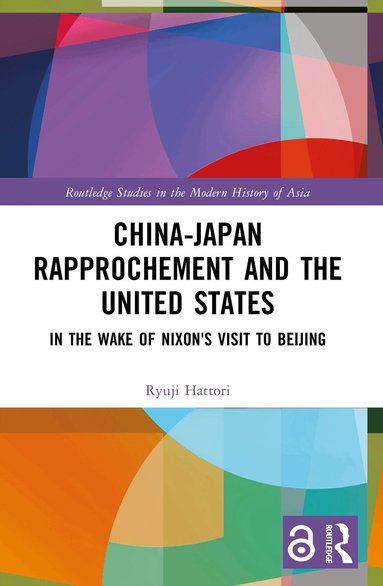
Du kanske också är intresserad av
Japanese Diplomacy and East Asian International Politics, 1918–1931
Ryuji Hattori
Inbunden, 2024
3 379 kr
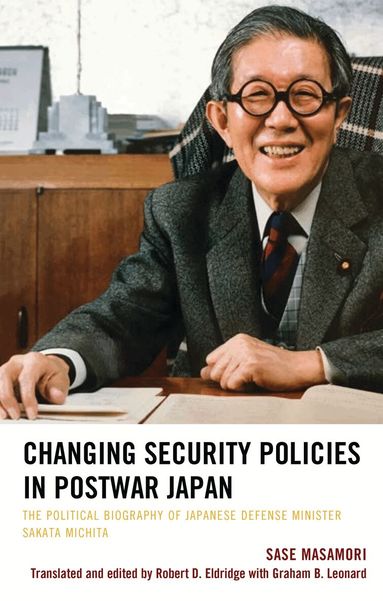
Changing Security Policies in Postwar Japan
Sase Masamori, Robert D. Eldridge, Graham B. Leonard
Inbunden, 2017
1 659 kr